

Have a question? Start here.
Browse our most common questions below. If you don’t see what you’re looking for, feel free to reach out using the form below.
Intuitive AI
-
Hassan Murad and Vivek Vyas co-founded Intuitive AI to address the global waste crisis. Growing up in Pakistan and India, they saw firsthand how unmanaged waste harms ecosystems and communities. In 2017, they launched Intuitive AI with a mission to make waste management smarter. Their flagship invention, Oscar Sort, uses AI to improve disposal accuracy to 91 percent, making recycling, reuse, and sustainability simple and measurable.
-
Intuitive AI is reimagining how the world manages waste. Through the Oscar Zero-Waste Platform, including Oscar Sort, Pixel, Pocket, Media, and Analytics, we remove confusion at the bin and make waste management data-driven and efficient. Our goal is to eliminate burning, landfilling, and pollution across land, sea, and space.
-
Today, Intuitive AI powers sustainability for Fortune 500 companies, airports, universities, and major venues across North America, Europe, Asia, and Australia, all working toward a circular, zero-waste future.
Oscar Sort
-
Most people sort waste correctly only about 30 percent of the time. With Oscar, accuracy can reach 90 percent or more, leading to cleaner recycling, less landfill waste, and measurable sustainability impact.
-
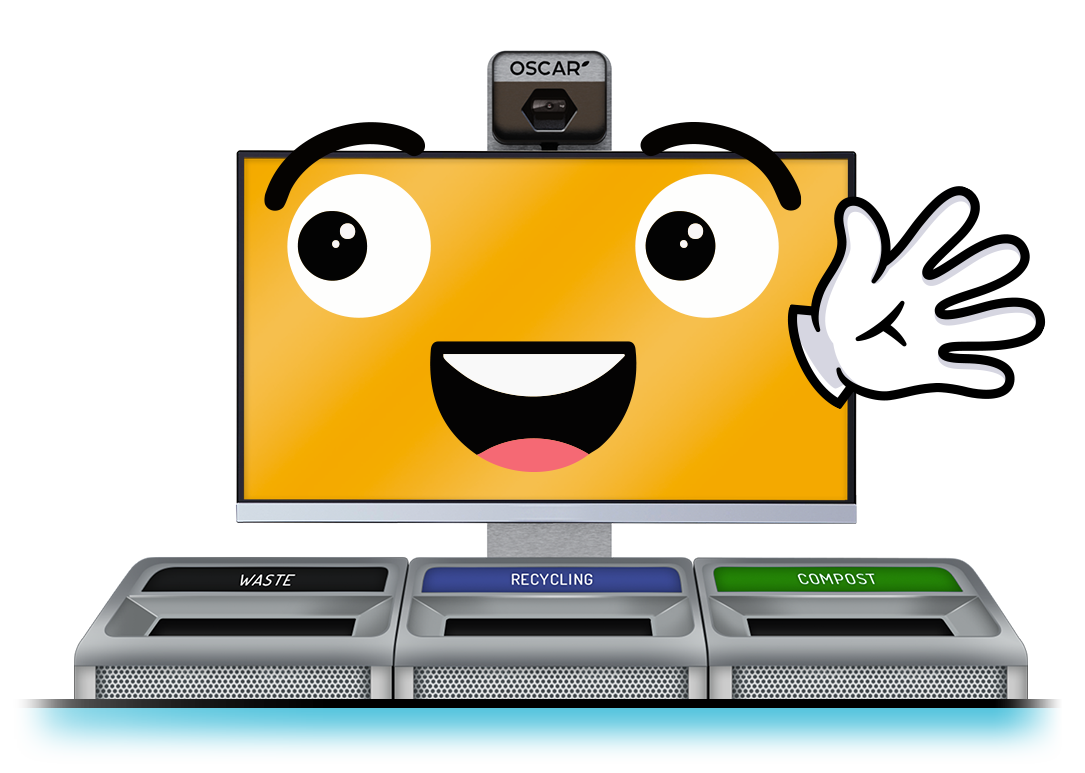
Oscar uses computer vision to recognize what you are throwing away and then shows you the correct bin for recycling, compost, or landfill. It acts as a smart sorting coach, helping people make the right choice instantly.
-
Oscar’s computer vision identifies waste items with 99 percent accuracy. What varies is human behavior at the bin, specifically whether people follow the guidance provided. Traditional bins see correct sorting about 30 percent of the time. With Oscar, accuracy improves significantly, reaching up to 96 percent in airports, universities, and stadiums.
Through clear, interactive guidance and gentle gamification, Oscar encourages better habits. Like any behavior change, improvement happens over time.
-
At scale, Oscar replaces confusion with guidance, using AI to teach better sorting in the moment. It builds lasting habits, cleaner waste streams, and measurable results.
-
Yes. Oscar runs on Edge AI, processing data locally while using minimal power. Each station helps prevent tons of CO₂ emissions, often saving more carbon than 10 to 20 cars produce in a year.
-
No. Intuitive AI is a privacy-first organization and complies with GDPR, PIPEDA, and other privacy regulations. Oscar focuses only on waste items, not people, and does not record, store, or transmit any personal data.
-
Oscar collects data on what items are disposed of, which bins they go into, which waste streams are most contaminated, and where the biggest recycling opportunities exist across a site. This gives facilities clear, actionable insight into how guests interact with waste infrastructure and whether changes to messaging and bin placement are driving real improvement.
Oscar collects waste-related data only, such as item types, timestamps, and contamination levels by bin, to improve recycling performance. No personal data is collected, stored, or sold.
-
Yes. Oscar complies with GDPR, PIPEDA, and other privacy regulations. It collects no personal data, making it safe for use in sensitive environments.
-
Even with clear labels, waste disposal is still a guess for many people. Labels are static, easy to overlook, and do not adapt to changing products, packaging, or local waste rules. As a result, contamination remains high, with limited visibility into what is going wrong or how behaviour changes over time.
Oscar changes this by turning waste disposal into an interactive, real-time experience. It recognizes the item in someone’s hand and provides immediate, clear guidance on where it belongs. That moment of feedback is far more effective than a label alone and creates a measurable feedback loop.
Beyond guidance, Oscar provides data. Facilities can see where confusion occurs, which items drive the most contamination, and whether changes to signage or bin placement are working. This makes it possible to continuously improve waste performance rather than relying on guesswork.
Traditional bins tell people what should go where. Oscar shows them exactly what to do and measures the impact.
-
Yes, and the results are measurable. Across industries and countries, Oscar deployments have driven 30 to 90 percent improvements in sorting accuracy, depending on the site and baseline conditions.
The challenge is not a lack of intent. Waste rules vary by location, packaging changes constantly, and people are expected to remember all of it at the final and least engaging moment of a product’s journey. Traditional signage assumes people already know the rules. Oscar does not.
Oscar provides real-time, visual guidance at the exact moment of disposal, turning uncertainty into clarity. Over time, this repeated feedback helps people learn by doing rather than reading, which leads to lasting behavior change.
Just as importantly, Oscar makes an otherwise forgettable moment engaging and intuitive. By introducing interaction and feedback where people are typically least engaged, Oscar transforms waste disposal from a passive task into an experience people remember and improve over time.
-
No. Like metering water or electricity, Oscar provides real, auditable data. Without measurement, improvement is not possible. But Oscar goes a step further. It does not simply observe waste behavior; it actively engages and educates people at the moment of disposal.
Oscar recognizes items in real time and guides guests on where they belong, reducing confusion and improving sorting accuracy as it happens. That immediate feedback helps people learn by doing, leading to better disposal habits over time. The resulting behavior change is then measured and verified through data on contamination, diversion, and emissions.
This combination of engagement and measurement separates Oscar from greenwashing. There are no assumptions or estimates. Every insight is based on what is happening at the bin, and every improvement is measurable.
Oscar does not claim sustainability outcomes. It creates them through education and engagement, then measures the results transparently.
-
Oscar is customized to each location’s recycling system. It is trained on local materials and updated remotely as rules change, ensuring accuracy anywhere it is deployed.
-
Yes. Using advanced computer vision, Oscar identifies contamination such as food residue and distinguishes between materials, even in complex packaging.
-
Oscar is designed to guide, nudge, and measure, not to force behavior. Like street signs or traffic signals, the guidance is there to help. If someone chooses to ignore it, that remains their decision.
In practice, most people do not ignore Oscar. Its movement, visuals, and real-time feedback naturally draw attention at the moment of disposal, reducing uncertainty and improving sorting accuracy even when engagement is brief.
Even when someone ignores the guidance, Oscar still provides value. It continues to measure actual disposal behavior, allowing operators to identify where confusion or resistance exists and adjust bin placement, messaging, or waste rules accordingly.
Oscar works with how people behave in the real world. It guides when possible, always measures, and helps facilities improve outcomes over time.
AI & Recycling
-
Waste rules change from city to city, packaging is rarely designed for clarity, and bins offer little real guidance. AI tools like Oscar provide simple, location-specific instructions so people know exactly what to do in the moment.
-
Yes, when materials are sorted correctly. Clean, uncontaminated streams are routinely recycled into new products. The challenge is not recycling itself, but keeping the wrong items out of the bin.
-
Sorting at the source keeps materials clean and valuable. When people sort correctly, recovery rates increase, costs decrease, and recycling facilities can operate as intended.
-
A single contaminant can spoil an entire load, sending recyclable material to landfill and increasing operational costs. Correct sorting protects material quality and helps ensure more waste is successfully recycled.
-
Traditional signs and manual sorting cannot keep up with the complexity of modern waste. AI provides real-time guidance, reduces contamination, and generates the data needed to improve recycling at scale.
-
No. AI lowers contamination fees, increases the value of recovered materials, and creates new operational efficiencies. The result is cleaner recycling and lower costs overall.


